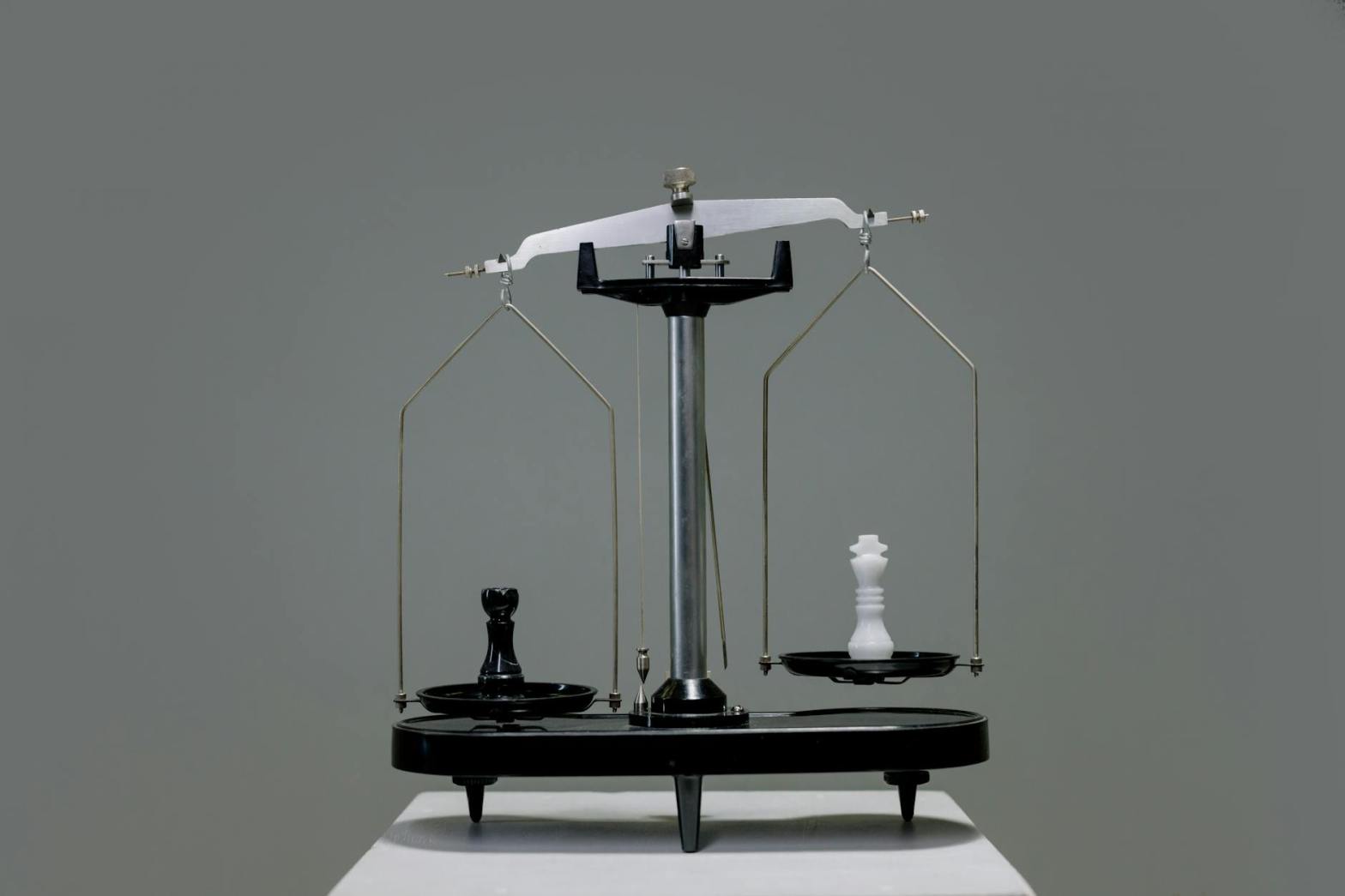
Early on, comparison barely registers. When you’re just starting out, the gap between your work and the writers you admire is so large it feels abstract. You expect to be behind. You’re learning the rules. Everyone else seems to be playing a different game.
Then something shifts.
You improve. Your sentences get cleaner. Your instincts sharpen. You start getting better feedback, maybe even a publication or two. And suddenly comparison hurts more—not less.
That’s not because you’ve become fragile. It’s because you’re close enough now to measure the distance accurately.
Improvement collapses the gap between aspiration and reality. When you can see how the work is made—when you understand craft, market fit, timing—you also become acutely aware of how uneven progress can be. You notice peers moving faster. You notice accolades clustering around certain names. You notice how small differences in opportunity or timing compound into large differences in visibility.
At this stage, comparison stops being inspirational and starts feeling personal.
There’s also a cognitive shift at play. As a beginner, you compare upward to masters and feel motivated. As an improving writer, you compare laterally—to people at roughly your level—and that comparison cuts deeper. It’s no longer about “someday.” It’s about now. About whether your trajectory is the right one. About whether you’re falling behind.
This is often when writers disengage. They pull back from communities. They stop reading announcements. They avoid conversations that trigger quiet envy or self-doubt. Sometimes that distance is necessary—but often it costs more than it protects.
The goal isn’t to stop noticing comparison. It’s to recalibrate how you interpret it.
One helpful reframe is to treat comparison as diagnostic rather than evaluative. Instead of asking “Why them and not me?” ask “What does this tell me about where my attention is?” Comparison points toward desire. It highlights what you care about—recognition, craft mastery, financial stability, belonging. That information is useful if you don’t immediately turn it into self-criticism.
Another recalibration is separating trajectory from snapshot. Writing careers are lumpy. They move in bursts, stalls, leaps, and plateaus. What you’re seeing in others is often a highlight reel of a very long process. Your own progress may be quieter, slower, or differently shaped—but still real.
It also helps to widen the lens. If your only metric is external validation, comparison will always wound. Expanding your criteria—what risks you’re taking, what you’re learning, what kind of work you’re building toward—gives you more stable ground to stand on.
Finally, remember that comparison intensifies when you’re doing serious work. It’s a sign you care, that you’re invested, that you’re no longer dabbling. That discomfort isn’t evidence you should disengage. It’s evidence you’ve leveled up into a more demanding phase of the craft.
Recalibration doesn’t mean pretending you don’t notice others’ success. It means letting it inform you without defining you.
You’re allowed to admire. You’re allowed to ache. And you’re allowed to keep going anyway.
That, too, is part of improvement.


Comparison is also deceptive for another reason: we never see what the other person had to go through, or what price they were willing to pay, to get where they are. We only ever see the end product of their work, not the blood, sweat, and tears that produced the work. It’s a question I ask myself often; what price am I willing (or able) to pay right now to get the result I want later? Often, it’s my own fears and weaknesses that hold me back. Other times it’s simply coming to terms with the fact that I’m not willing to pay that kind of price or make that kind of sacrifice.
LikeLiked by 1 person
This is a complex one and I love this comment @morgan – I do think that’s another aspect of it, but I have to caveat my feelings about this aspect – writing is unfair. At Starbucks, you work 8 hours, you get 8 hours pay. But writing is not 10 hours of work equals one short story, or a million words equals your first novel, or four unpublished novels leads to one published, or even 10 pub;ished novels equals a Hugo or a Nebula award. There is luck to it. Where I 100% endorse what you’re saying is that sometimes it *looks* like there is more luck than there is – someone writes their first short story, sends it out and gets accepted. And that’s where all the ‘hidden work’ you’re referring to comes into play. As if it was literally the first time they picked up a pen, then that would not be possible. But that person may have been writing FanFic for years and not counted it, or having been reading dozens of short stories a week, and critiquing them for their literature PhD, or have worked editing a non-fiction journal or newspaper, or work as a technical writer, or have an MFA, or…. just been writing for years but never submitted any of their stories until they got to this one crowning moment when they could finally find no flaws in something they wrote and found the courage to actually send one out. To me both of those are factors, and whether its either of those or the aspect I wrote about above I think the bottom line message is – try not to compare yourself to others, but if you must, be kind to yourself. 🙂
LikeLiked by 1 person